Title
FORM IN ABSENCE
Artist
Opening Reception
Exhibition Period
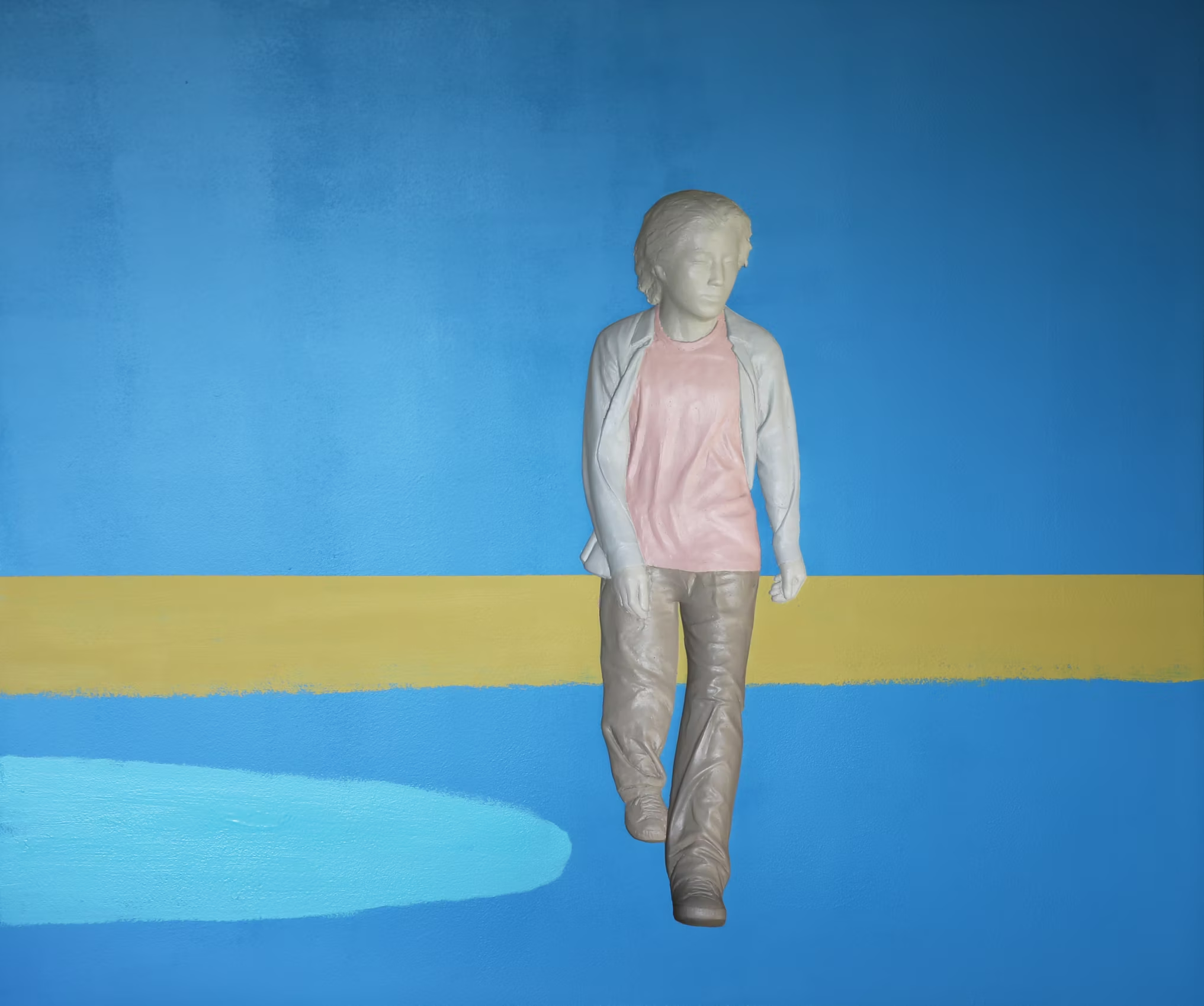
Lee's sculptures embody a quiet tension in which presence and absence, reality and illusion coexist, making perception unstable and endlessly shifting.
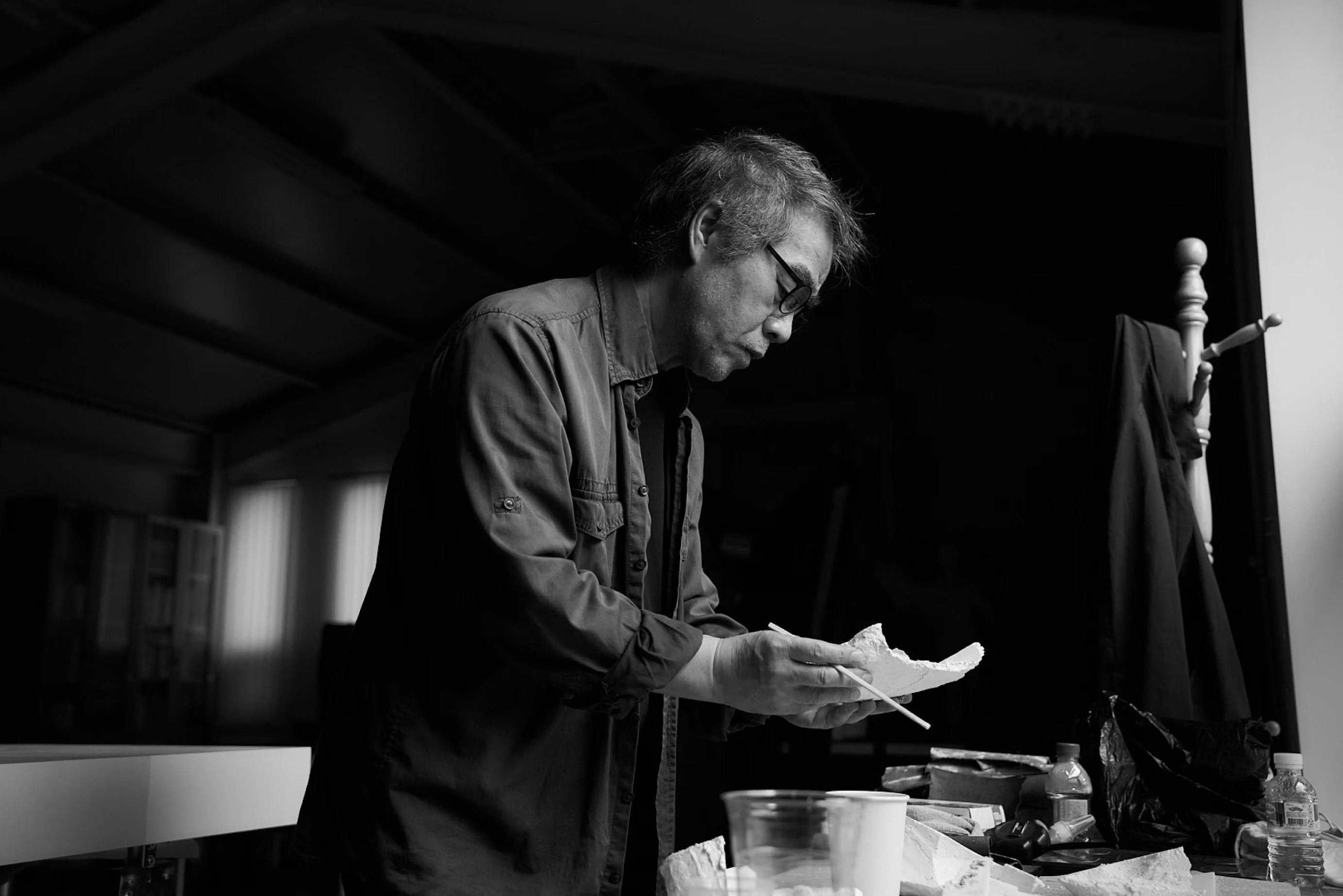
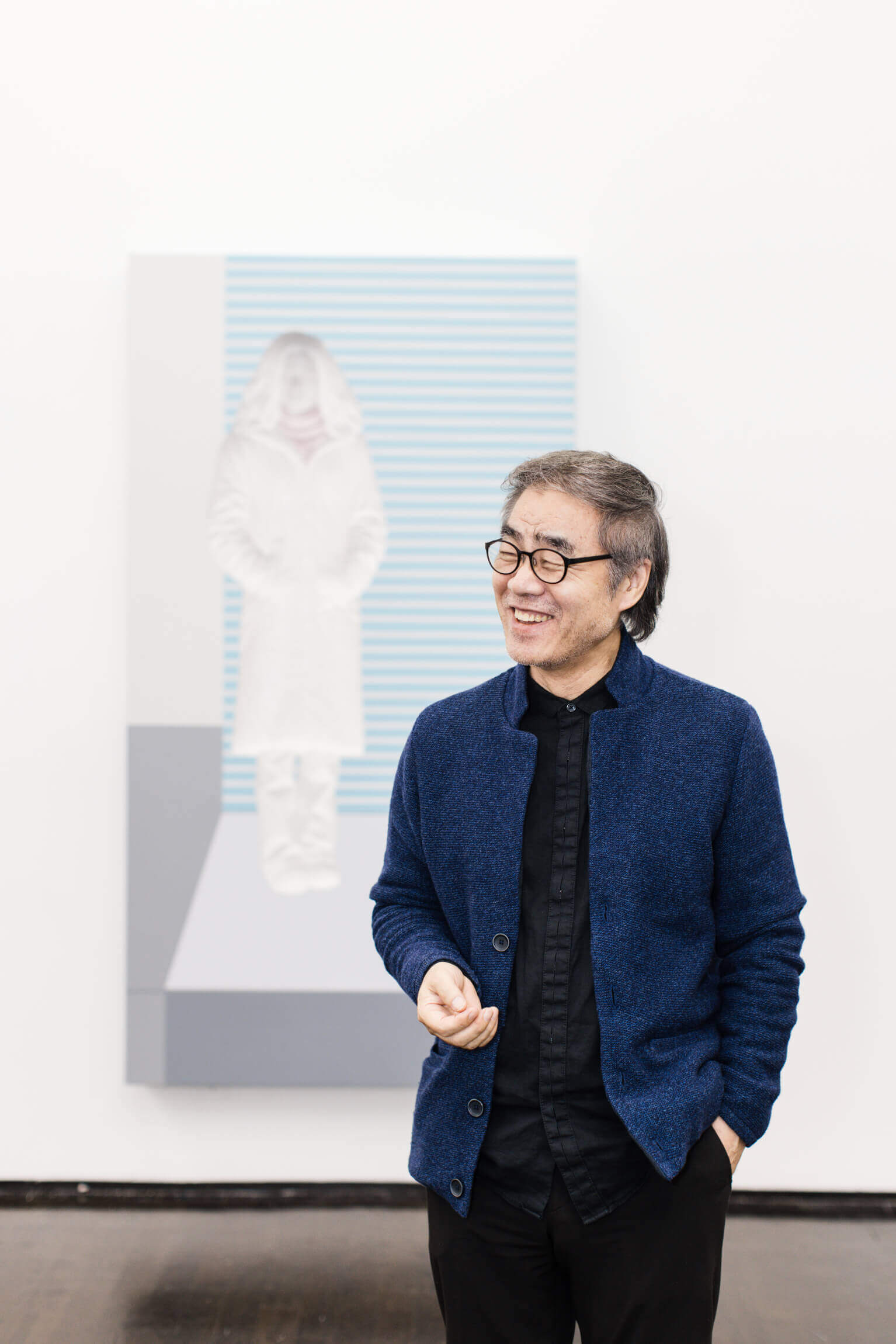
Lee Yong Deok (b. 1959, Seoul) is a Korean sculptor whose practice redefines the boundaries of form, perception, and space. Educated at Seoul National University and later in Berlin as a Meisterschüler, he has exhibited internationally at the Seoul Museum of Art, the National Art Museum of China, and the Duolun Museum of Modern Art in Shanghai. Throughout his career, Lee has received numerous awards, including the Moonshin Fine Art Award and the Kimseajoong Prize, which have marked his influential role in contemporary sculpture.

At the heart of his artistic inquiry lies inverted sculpture, a series that exists between what seems to emerge outward and what, in reality, recedes inward. These works challenge the viewer’s assumptions by presenting concave forms that appear convex, dismantling the line between solidity and void. Lee’s sculptures embody a quiet tension in which presence and absence, reality and illusion coexist, making the act of perception unstable and endlessly shifting. By engaging with light, shadow, and perspective, he creates figures that seem to transform before the viewer’s eyes.

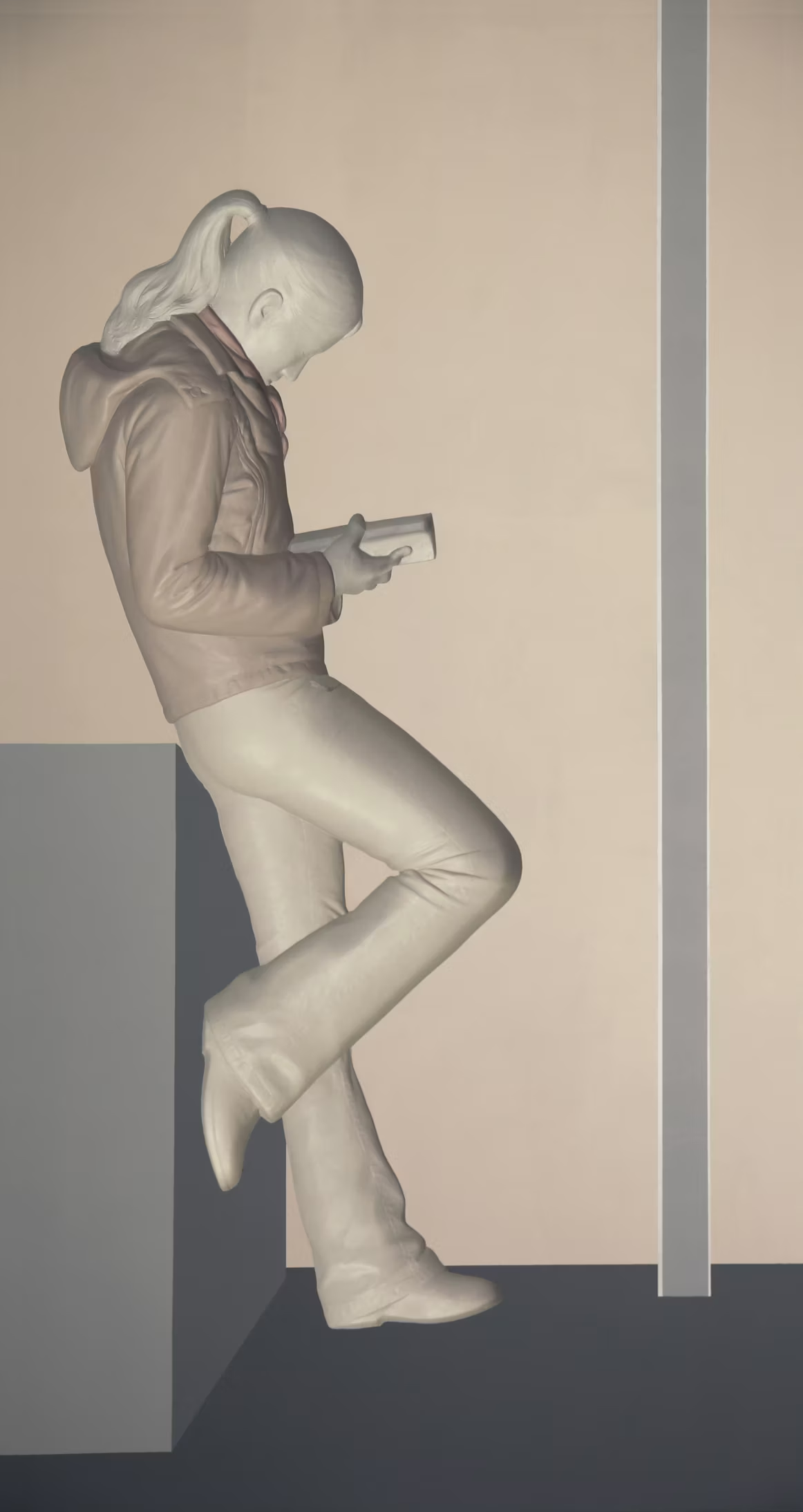
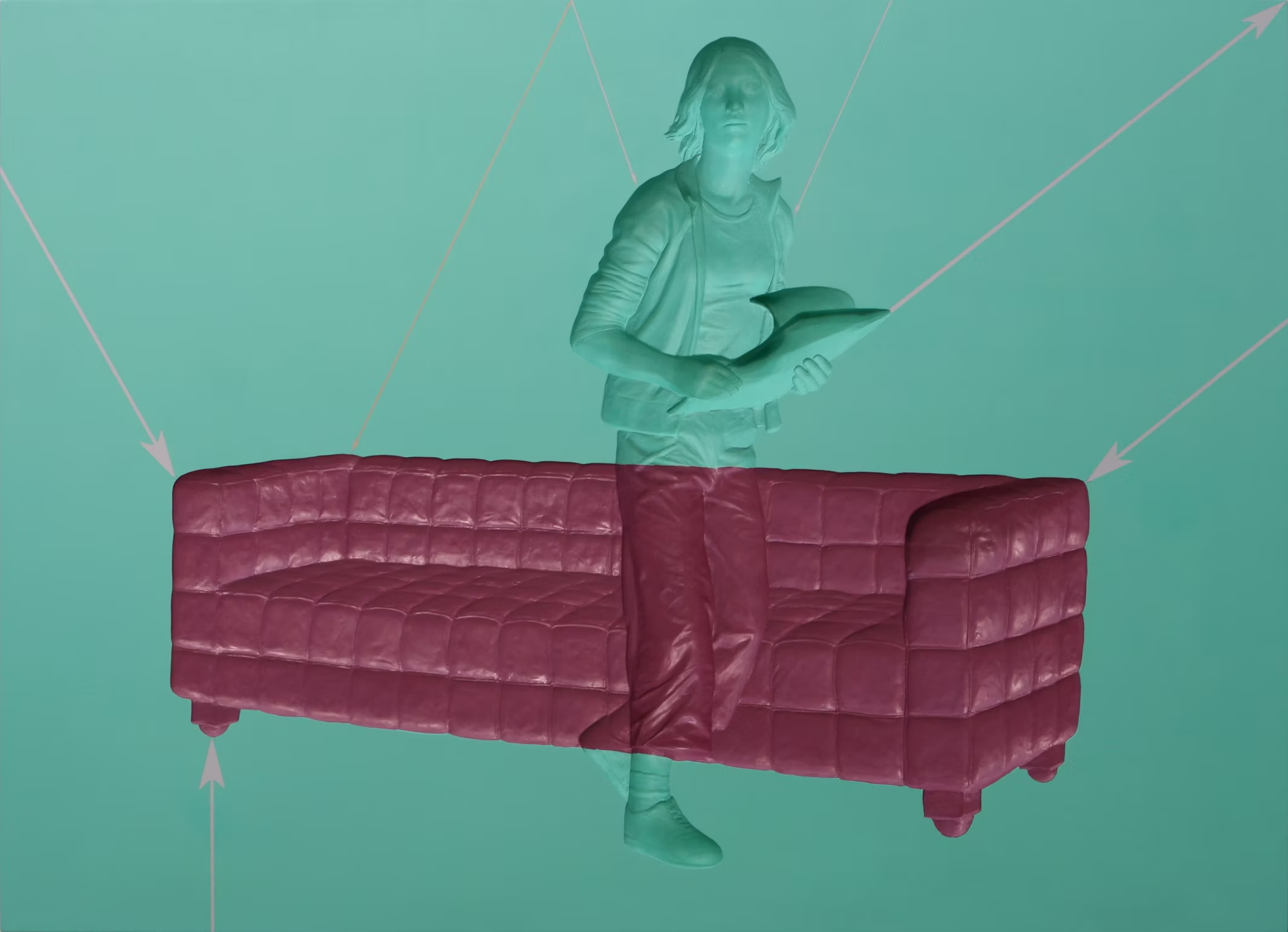
In this way, inverted sculpture resists the notion of sculpture as a fixed object and instead becomes an active experience. The works invite audiences to move, look again, and participate in the unfolding of form—discovering that surface and depth, appearance and truth, are never absolute but always in a state of dialogue. Through this exploration, Lee Yong Deok expands thought and perception, leaving viewers to question not only what they see but how they see.

Artist
Lee Yong Deok, born in Seoul in 1956, is a prominent South Korean sculptor known for his striking “inverted sculptures” that play with visual perception and spatial illusion. He studied sculpture at Seoul National University, where he earned both his undergraduate and graduate degrees, before continuing his artistic training at the Berlin University of the Arts under the Meisterschüler program. Emerging in the mid-1980s, Lee was part of a new wave of Korean artists who pushed beyond the dominant Dansaekhwa movement, reintroducing figurative elements into contemporary art. His work often explores the tension between opposites, such as inner and outer, light and shadow, prompting viewers to question what is real and what is imagined.
Lee has exhibited internationally, with solo shows in major institutions like the Schulmuseum in Berlin and the National Museum of China. His 2018 exhibition “Indivisibility” at Arario Gallery in Cheonan delved into philosophical themes of unity and perception, drawing on ancient ideas from thinkers like Parmenides. In addition to his studio practice, Lee has made a lasting impact on Korean art education, serving as both professor and dean at Seoul National University’s College of Fine Arts. He has received several major honors, including the Kim Sechoong Sculpture Award and the Moonshin Art Award, reflecting the depth of his influence on the contemporary art world.